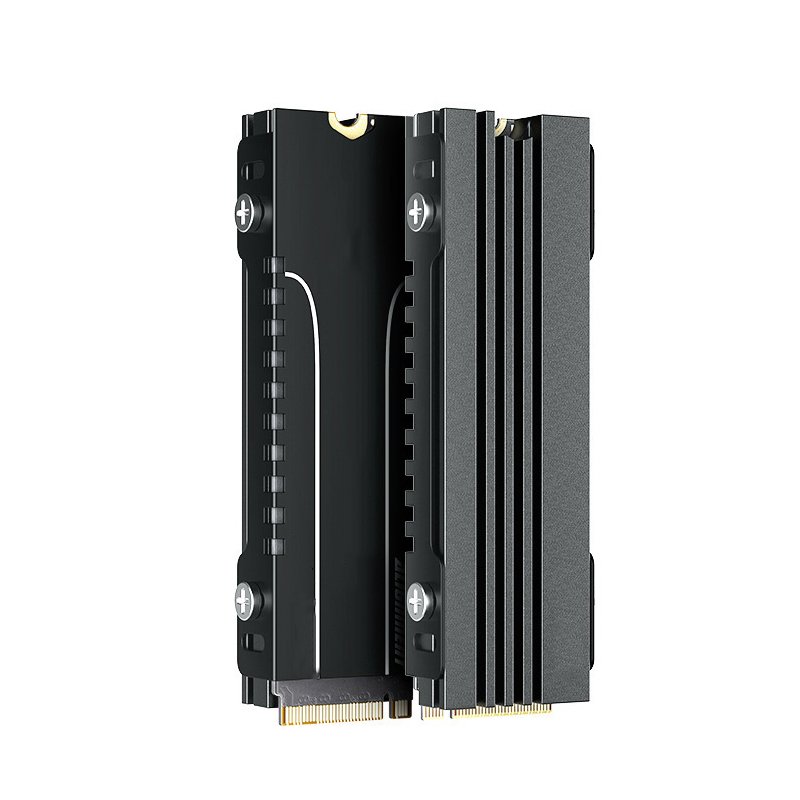
When you invest in a blazing-fast solid-state drive, you expect raw, unadulterated speed. But there's a silent assassin lurking within your PC that can cripple your SSD's performance and shorten its life: heat. Understanding the Performance Benefits of SSD Heatsinks (Benchmarks & Real-World) isn't just about chasing higher numbers; it's about safeguarding your investment and ensuring your system delivers consistent, top-tier performance when you need it most.
Modern SSDs, especially the latest NVMe M.2 drives, are technological marvels, pushing data transfer speeds to unprecedented levels. But this incredible data throughput generates significant heat – often ranging from 40°C to over 70°C under typical workloads, and potentially soaring to 80°C or even higher during intense tasks like heavy gaming, large file transfers, or demanding video editing. This isn't just an academic concern; it's a direct threat to your drive's speed, stability, and longevity.
At a Glance: Why SSD Heatsinks Matter
- Heat is the Enemy: SSDs can hit 80°C+ under heavy use, leading to problems.
- Performance Killer: Excessive heat triggers "thermal throttling," reducing speeds by up to 30%.
- Lifespan Reducer: High temps can nearly halve your SSD's operational life and increase error rates.
- Heatsinks to the Rescue: They actively dissipate heat, keeping your drive cooler and preventing throttling.
- Real-World Gains: Expect up to a 15% boost in read/write speeds and up to 30% longer lifespan.
- Cost-Effective Insurance: A small investment for significant peace of mind and sustained performance.
The Silent Threat: How Heat Cripples Your SSD
Imagine an athlete running a marathon. If they overheat, their body slows down to prevent damage. Your SSD does the same thing, but it's called thermal throttling. When an SSD's temperature climbs too high, its internal firmware detects the risk of damage to its sensitive components, particularly the NAND flash memory cells and the controller. To protect itself, the drive deliberately slows down its operations.
This isn't a minor slowdown. Excessive heat can lead to a performance drop of up to 30%, effectively turning your cutting-edge NVMe drive into something far less impressive. Beyond just speed, the consequences are severe:
- Reduced Lifespan: Operating consistently at high temperatures can reduce your drive's lifespan by nearly half. Heat accelerates the degradation of NAND flash cells, meaning your drive reaches its write endurance limit much faster.
- Increased Error Rates & Data Corruption: High temperatures can increase the likelihood of read/write errors and, in extreme cases, lead to data corruption, turning your precious files into unreadable gibberish.
- System Instability: A struggling, throttled SSD can impact overall system responsiveness, leading to stuttering, longer load times, and even unexpected crashes.
This isn't just hypothetical. Newer PCI-Express Gen 5 SSDs, designed for incredible speeds, generate even more heat than their predecessors, making them particularly susceptible to these heat-related problems. Without proper cooling, you're leaving a significant chunk of their potential performance on the table.
The Heatsink Solution: Cooling Power, Consistent Performance
This is where SSD heatsinks become not just a helpful accessory, but a vital component for anyone serious about their system's performance and longevity. An SSD heatsink is essentially a passive or active cooling device designed to draw heat away from the SSD's controller and NAND chips and dissipate it into the surrounding air.
Think of it like the radiator in a car. It's there to keep the engine from overheating and ensuring it runs efficiently. SSD heatsinks perform the same function for your solid-state drive. By preventing temperatures from escalating beyond optimal operating conditions (ideally below 70°C), heatsinks eliminate the need for the SSD to throttle itself, allowing it to consistently deliver its advertised speeds.
Unpacking the Performance Benefits: Benchmarks & Real-World Impact
The theoretical advantages of cooler SSDs translate directly into tangible performance improvements and enhanced reliability in real-world scenarios.
Speed Gains You Can Measure
One of the most immediate and impactful benefits of an SSD heatsink is the prevention of thermal throttling, leading to sustained high speeds. Our research indicates that implementing heatsinks can boost read/write speeds by up to 15%. This isn't just a marketing claim; it's observed in benchmarks comparing identical drives with and without adequate cooling.
- Benchmark Example: Imagine a high-end NVMe drive rated for 7000 MB/s sequential reads. Without a heatsink, after just a few minutes of transferring a large game file or 4K video project, its temperature might hit 75°C, causing it to throttle down to 5000 MB/s or even less. With a well-designed heatsink, that same drive could maintain 65°C and sustain speeds closer to its rated 7000 MB/s throughout the entire transfer. This difference of 5-10°C from preventing throttling can mean significant time savings for large file operations.
- Real-World Application: For gamers, this means faster game loading screens and seamless texture streaming. For video editors, it translates to quicker project exports and smoother timeline scrubbing. For professionals dealing with massive datasets, it means less waiting and more doing. You're not just getting faster burst speeds; you're getting consistent high performance over extended periods.
Longevity and Reliability: Extending Your Investment
Beyond raw speed, heatsinks offer a profound impact on the long-term health and reliability of your SSD. By keeping temperatures below that critical 70°C threshold, heatsinks can extend an SSD's lifespan by as much as 30%. This isn't a small number when you consider the cost of high-capacity NVMe drives.
- Preserving NAND Flash: The NAND flash memory cells within your SSD are sensitive to heat. Each read/write cycle, combined with high temperatures, gradually degrades these cells. By keeping them cooler, you slow down this degradation, ensuring the drive can endure more write cycles over its lifetime. This directly contributes to preserving NAND flash memory cell integrity.
- Reduced Error Rates: Cooler operating temperatures mean fewer internal errors that the SSD controller needs to correct. This translates to a more stable and reliable drive, reducing the risk of data corruption and increasing overall system stability.
- Consistent Workflow: A drive that isn't constantly battling overheating issues promotes a consistent and predictable workflow. You won't encounter unexpected slowdowns or system hiccups due to your storage struggling under load.
What Drives the Heat: Factors Influencing SSD Temperature
While SSDs are inherently prone to heat generation, several factors exacerbate the issue:
- Heavy Workloads: This is the primary culprit. Continuously reading or writing large amounts of data, common in activities like:
- Gaming: Loading large open-world games, texture streaming, and quick saving.
- Video Editing/Content Creation: Handling high-resolution footage, rendering, and exporting.
- Large File Transfers: Moving hundreds of gigabytes between drives.
- Software Development/Compiling: Intensive read/write operations during code compilation.
- Virtualization: Running multiple virtual machines.
- High Ambient Temperatures: If your room or office is hot, your PC components will naturally run hotter. This gives your SSD's cooling system (or lack thereof) a harder job.
- Poor Computer Case Airflow: A cramped case, poorly positioned fans, or an overall lack of air movement can trap hot air around your SSD, leading to increased temperatures.
- SSD Placement: M.2 SSDs located directly under a hot GPU or in a slot without any direct airflow will inevitably run hotter.
Choosing the Right Heatsink: Materials, Types, and Compatibility
Not all heatsinks are created equal. Understanding the options will help you make an informed decision.
Materials Matter
The material of your heatsink directly impacts its ability to conduct and dissipate heat.
- Graphene: This material offers exceptional thermal conductivity. Graphene heatsinks are particularly effective for M.2 SSDs dueoting their ability to efficiently transfer heat away from the tiny, high-density chips. They are often very thin and lightweight, making them suitable for tight spaces.
- Aluminum: A popular and cost-effective choice. Aluminum is lightweight and boasts good thermal performance, making it a common material for many aftermarket SSD heatsinks. It provides a significant cooling improvement over having no heatsink at all.
- Copper: While less common for standalone SSD heatsinks due to cost and weight, copper has superior thermal conductivity to aluminum. Some high-end heatsinks or integrated motherboard solutions might use copper elements.
Passive vs. Active Heatsinks
- Passive Heatsinks: These are the most common type. They consist of fins or a block of conductive material designed to increase surface area, allowing heat to radiate into the surrounding air. They have no moving parts, making them silent and incredibly long-lasting. Most M.2 heatsinks you'll encounter are passive.
- Active Heatsinks: These incorporate a small fan in addition to a heatsink structure. They offer superior cooling performance compared to passive designs but introduce noise and have a shorter lifespan due to moving parts (the fan). They are generally reserved for extremely high-performance drives (like some PCIe Gen 5 models) or challenging thermal environments.
Compatibility is Key
Before purchasing, ensure the heatsink is compatible with your SSD's size and form factor.
- M.2 SSDs: These are the most common candidates for heatsinks. They come in various lengths (e.g., 2230, 2242, 2260, 2280, 22110), with 2280 (22mm wide, 80mm long) being the most prevalent. Ensure your chosen heatsink matches your SSD's length and doesn't interfere with other components on your motherboard (like a large GPU or CPU cooler). Many motherboards now come with integrated M.2 heatsinks, which are often sufficient for most users.
- 2.5-inch SSDs: These SATA drives generally run much cooler than M.2 NVMe drives and rarely require dedicated heatsinks. Their metal casing often acts as a natural heat spreader.
Installation Matters: Getting the Most Out of Your Heatsink
A great heatsink won't perform optimally if installed incorrectly.
- Thermal Interface Material (TIM): This is critical. You'll either use thermal paste or thermal pads between the SSD controller/NAND chips and the heatsink.
- Thermal Pads: These are more common for SSD heatsinks due to variations in chip heights. They are easy to apply and provide good thermal conductivity. Ensure the pad makes firm, even contact.
- Thermal Paste: While excellent for CPUs, it can be messier for SSDs and requires careful application to avoid shorting components. Some heatsinks come pre-applied with paste.
- The goal is to eliminate air gaps, which are poor conductors of heat, ensuring maximum thermal conductivity from the SSD to the heatsink.
- Proper Positioning: Once installed, ensure the heatsink isn't obstructed. It needs airflow to dissipate heat effectively.
- If possible, orient the heatsink's fins parallel to your case's airflow path.
- Avoid placing it directly under a hot graphics card if other M.2 slots are available.
- Well-ventilated configurations can result in SSDs operating up to 20% cooler.
Monitoring Your SSD's Health: Knowing When You Need a Heatsink
How do you know if your SSD needs a heatsink? You monitor its temperature.
Several free, reliable software tools can help you track your SSD's thermals:
- HWMonitor: A comprehensive hardware monitoring tool that displays temperatures for all your components, including SSDs.
- CrystalDiskInfo: A dedicated SSD utility that shows drive health, temperature, and other SMART data.
- Your Motherboard's Utility Software: Many motherboard manufacturers provide their own monitoring tools that can display M.2 SSD temperatures.
What to Look For: - Idle Temps: Generally in the 30-45°C range.
- Load Temps: Under heavy use, ideally below 65-70°C. If you consistently see temperatures creeping above 70°C, especially nearing 80°C or higher, a heatsink is a worthwhile investment. Monitoring temperatures post-installation helps confirm its effectiveness and allows for any necessary adjustments to airflow or heatsink positioning.
Who Needs an SSD Heatsink Most? Making the Decision
While not always essential for every user, an SSD heatsink is a cost-effective investment that offers significant returns in the right scenarios.
You'll see the most benefit if you:
- Frequently Perform Demanding Tasks: Gamers, video editors, 3D artists, CAD designers, or anyone regularly transferring large files.
- Live in Hot Climates: Higher ambient temperatures mean your components work harder to stay cool.
- Have Poorly Ventilated Computer Cases: If your case struggles with airflow, a heatsink provides a crucial direct cooling solution for your SSD.
- Value Longevity and Reliability: If you want your SSD to last as long as possible and avoid potential data issues.
- Own a PCIe Gen 4 or Gen 5 NVMe SSD: These drives are the most potent heat generators and benefit immensely from dedicated cooling.
- Have an M.2 SSD without a Motherboard Heatsink: Many modern motherboards include an integrated M.2 heatsink, which can be sufficient for many users. If your slot is bare, an aftermarket heatsink is a wise addition.
For basic office work, web browsing, or light gaming, a heatsink might provide only subtle gains (e.g., a 5-10°C reduction from preventing minimal throttling), but for heavy users, it's a game-changer.
Common Questions & Misconceptions About SSD Heatsinks
Let's clear up some common doubts.
Do all SSDs need heatsinks?
No. Most SATA 2.5-inch SSDs run cool enough that a heatsink isn't necessary. Even many older or lower-performance NVMe M.2 drives might operate within acceptable thermal limits without one, especially if your PC has good airflow. The real need arises with high-performance NVMe drives (especially Gen 4 and Gen 5) and demanding workloads.
My motherboard has a built-in M.2 heatsink. Is that enough?
Often, yes. Many motherboard-integrated heatsinks are well-designed and sufficient for most use cases, especially for PCIe Gen 3 and even many Gen 4 drives. However, if you're pushing a top-tier Gen 5 drive hard, or if your case airflow is suboptimal, an aftermarket heatsink might offer superior performance. Always monitor temperatures to be sure.
Can a heatsink damage my SSD?
No, if installed correctly, a heatsink will only protect your SSD. Improper installation (e.g., shorting components with thermal paste, applying excessive pressure, or using an incompatible size) could cause issues, but this is user error, not an inherent flaw in the heatsink itself.
Are active heatsinks (with fans) better than passive ones?
Active heatsinks generally offer superior cooling performance. However, they introduce noise, consume a tiny bit of power, and have a shorter lifespan due to moving parts. For most users, a good passive heatsink is sufficient and offers the benefits of silence and reliability. Active cooling is typically reserved for extreme scenarios.
How much do SSD heatsinks cost?
They are surprisingly affordable. Passive M.2 heatsinks typically range from a few dollars to several tens of dollars, making them a very cost-effective investment compared to the price of an SSD or the potential cost of data loss and performance degradation.
Your Next Move: Secure Your SSD's Future
The evidence is clear: SSD heatsinks aren't just an optional upgrade; for many users, they are a critical component for unlocking and maintaining the full performance potential of their solid-state drives. By actively managing heat, you're not just preventing throttling; you're actively extending the lifespan of your drive, enhancing system stability, and ensuring your investment delivers consistent, top-tier performance for years to come.
Take a few minutes to monitor your SSD's temperature using tools like HWMonitor or CrystalDiskInfo. If you see those numbers creeping up, especially under load, consider adding a quality heatsink. It's a small investment that pays significant dividends in speed, reliability, and peace of mind. Your blazing-fast SSD deserves to run cool, calm, and consistently at its peak.